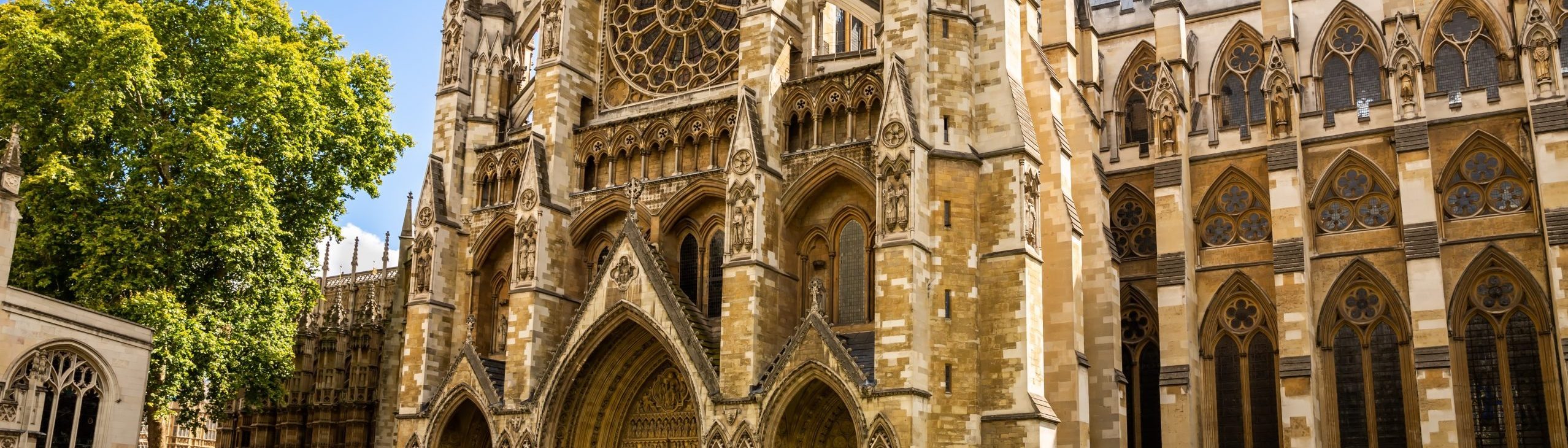
Westminster Standards
The Free Presbyterian Church of Scotland maintains full and strict subscription to the Bible (AV / KJV) as its standard and the original Westminster Confession of Faith as its subordinate standard. This confession is the greatest of all the creeds of the Christian church.
Puritans
The Westminster Assembly of Divines began meeting in London in 1643 and spent five years producing the confession. Most of its members were Puritans from England, but there were some notable commissioners from Scotland. These were Alexander Henderson, Samuel Rutherford, Robert Baillie, and George Gillespie.
“It was the period of the Puritan ascendancy. Perhaps no other period in the Church’s history can boast of such a distinguished band of experimental theologians. The Puritan divines are facile princeps the theologians of Practical Theology. An age that could boast of an Owen – the spell of whose genius and learning was second only to Calvin’s – of the great expository powers of Goodwin, of Charnock, Adams, Brooks, Baxter and others, may safely enough be described as an age of great spiritual fervour and deep piety. Anyone who has read the writings of the Puritans cannot but be impressed with the great learning and deep spiritual insight which they display.” – Rev. D. Beaton in The Assembly and the Confession of Faith. Free Presbyterian Church of Scotland Magazine 1899.
Presbyterian Churches in Scotland
The Church of Scotland adopted the Westminster Confession of Faith in 1648. The Free Church of Scotland later retained full subscription to the original Confession at the Disruption of 1843. However, in 1892 the Free Church passed a Declaratory Act to relax the strictness of their subscription to the Confession. Subsequently in 1893, after attempts to repeal the Act failed, a lone Free Church minister, Rev. Donald Macfarlane protested. Having protested he separated to form the Free Presbyterian Church of Scotland, which preserved intact the original Free Church constitution.
Strict Subscription to Westminster Standards
The 20th Century saw a marked decline in the strictness of subscription to the Westminster Confession of Faith in almost all churches who profess allegiance to it. Conversely, the Free Presbyterian Church of Scotland maintains the strict subscription and practice of the Scottish Reformers and the Puritans, in relation to the Confession.
Therefore the Westminster Confession of Faith is the official subordinate standard of the Free Presbyterian Church of Scotland. However we also subscribe to the associated documents known as the Westminster Standards, such as the Larger Catechism and the Shorter Catechism. For more information on the Westminster Confession of Faith see the below article by Rev. Hugh Cartwright.
| The Westminster Confession of Faith – Its Usefulness in the Church – by Rev. H. Cartwright Before enquiring into the usefulness of the Westminster Confession of Faith, we must note that Confessions of Faith are legitimate for those who avow the supreme authority of the Bible, and that the Westminster Confession of Faith is exceptionally suitable for all the public and ecclesiastical functions of a Confession. |
We invite you to learn more about our history and our worship. You can learn more about the Free Presbyterian Church of Scotland as a global denomination by visiting the website.
Westminster Standards
Doctrines of Grace Access the documents which comprise the Westminster Standards below. You will find here the Doctrines of Grace or the Five Points of Calvinism. you will also find Covenant Theology, Repentance unto Life, and Saving Faith. The Westminster Confession of FaithThe Confession of Faith Agreed upon by the Assembly of Divines at Westminster, with the assistance of Commissioners from the Church of Scotland, as…
Shorter Catechism
The Free Presbyterian Church of Scotland, both parents and Sabbath Schools, teaches the Shorter Catechism to children from an early age. Learning the sound doctrine of the shorter catechism establishes their understanding of the fundamental truths of the Reformed Religion, such as the Fall of Man, Effectual Calling, Justification by Faith, and Sanctification. It also defends them against the many false and…